Step-by-Step Guide to Padel Court Installation


Padel is booming across the world — from Europe to the Middle East, Asia to the Americas. As clubs, schools, and investors race to set up courts, quality installation has become a defining factor in long-term success.
In this guide, you’ll learn every step of a padel court installation — from planning to finishing touches — to help you build world-class courts.
We’ll explore site selection, foundation work, surface preparation, lighting, and more — plus how PFS Padel delivers turnkey solutions globally.
Understanding the Padel Court Installation Process
Installing a padel court is not just construction — it’s a blend of engineering, sport science, and precision design. Every detail matters: the surface, the walls, the lighting, and even drainage. With PFS Padel, every court meets global standards, ensuring durability and exceptional play experience.
Step 1 – Site Assessment and Planning
Before anything else, a thorough site assessment sets the foundation for success.
The team evaluates space, soil, drainage, and access points. Ideal padel courts require at least 20×10 meters for doubles and proper clearance around.
PFS Padel conducts global feasibility checks, ensuring your project aligns with local weather, terrain, and regulations.
Key tip: Always account for orientation — north-south court alignment minimizes sun glare for players.
Step 2 – Foundation and Base Construction
The foundation determines court stability. A high-quality concrete base, usually 12–15 cm thick, provides durability and drainage.
PFS Padel uses precision leveling techniques and water-resistant materials to ensure courts stay even and safe — even under heavy rain or temperature shifts.
Transition tip: Never compromise on the base — it’s the backbone of performance and longevity.
Step 3 – Frame and Structure Installation
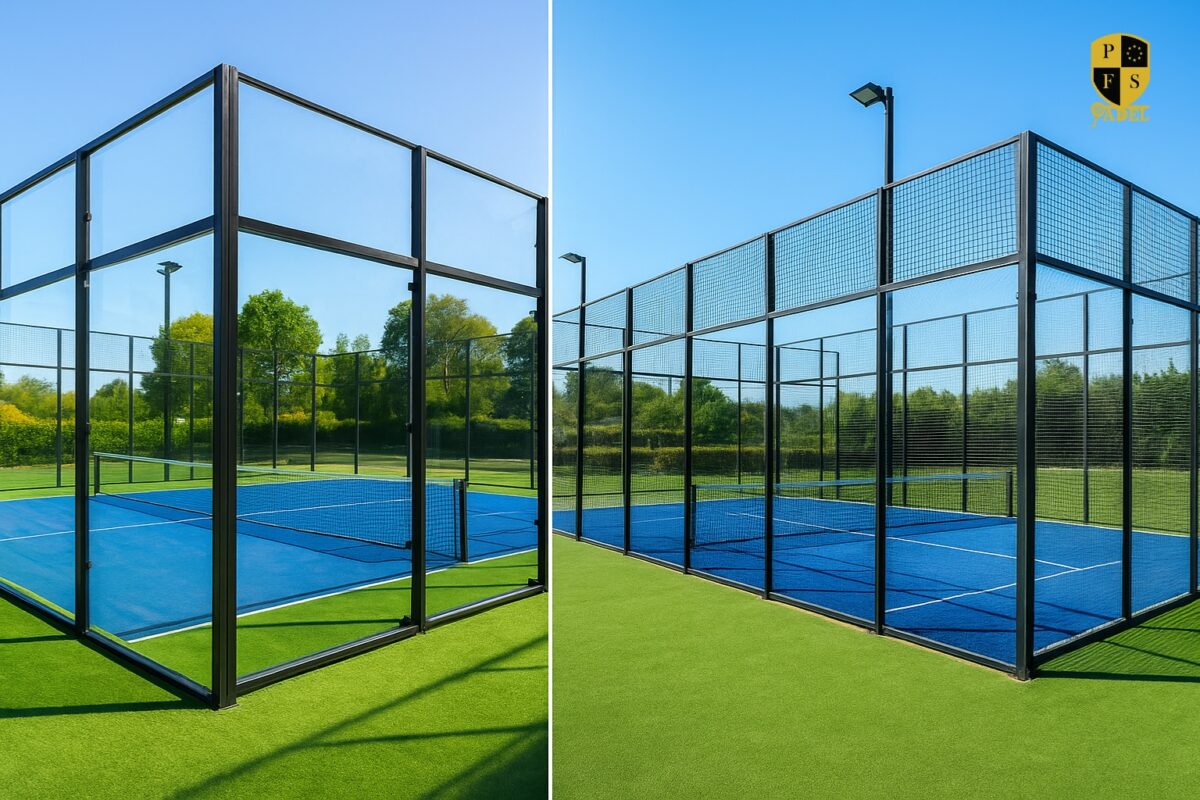
The iconic glass-and-metal structure defines padel’s look. PFS Padel installs galvanized steel frames and tempered glass panels with millimeter precision.
Each wall must withstand strong ball rebounds and weather exposure. Proper anchoring, coating, and alignment guarantee structural integrity for years.
Pro insight: Glass panels should be 10–12 mm thick, secured with anti-vibration fasteners for smooth gameplay.
Step 4 – Surface Laying
The playing surface directly influences comfort and ball bounce.
PFS Padel offers multiple options: synthetic turf, acrylic coatings, and sand-infill systems, each suited for different climates and playing intensities.
The turf is installed with a shock-absorbent base and silica sand filling for consistent traction and rebound.
Transition: The right surface ensures safety, reduces injuries, and enhances gameplay — a must for professional-level play.
Step 5 – Lighting Setup
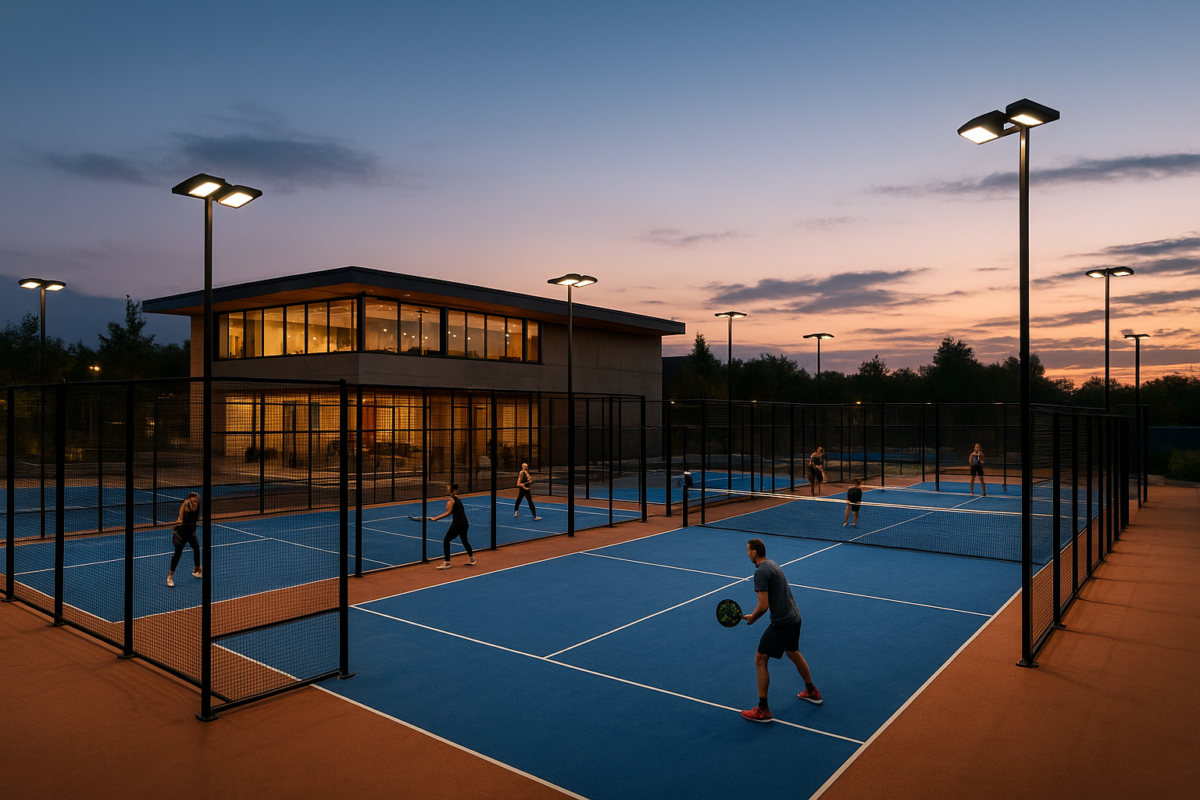
Lighting transforms evening games into prime-time experiences.
According to international standards, LED floodlights with 300–500 lux are ideal.
PFS Padel’s lighting solutions ensure even distribution, low glare, and energy efficiency — perfect for both indoor and outdoor setups.
Tip: Smart lighting control systems can help save up to 40% energy while offering superior visibility.
Step 6 – Fence and Glass Installation
Fencing and glass not only provide enclosure but also safety and style.
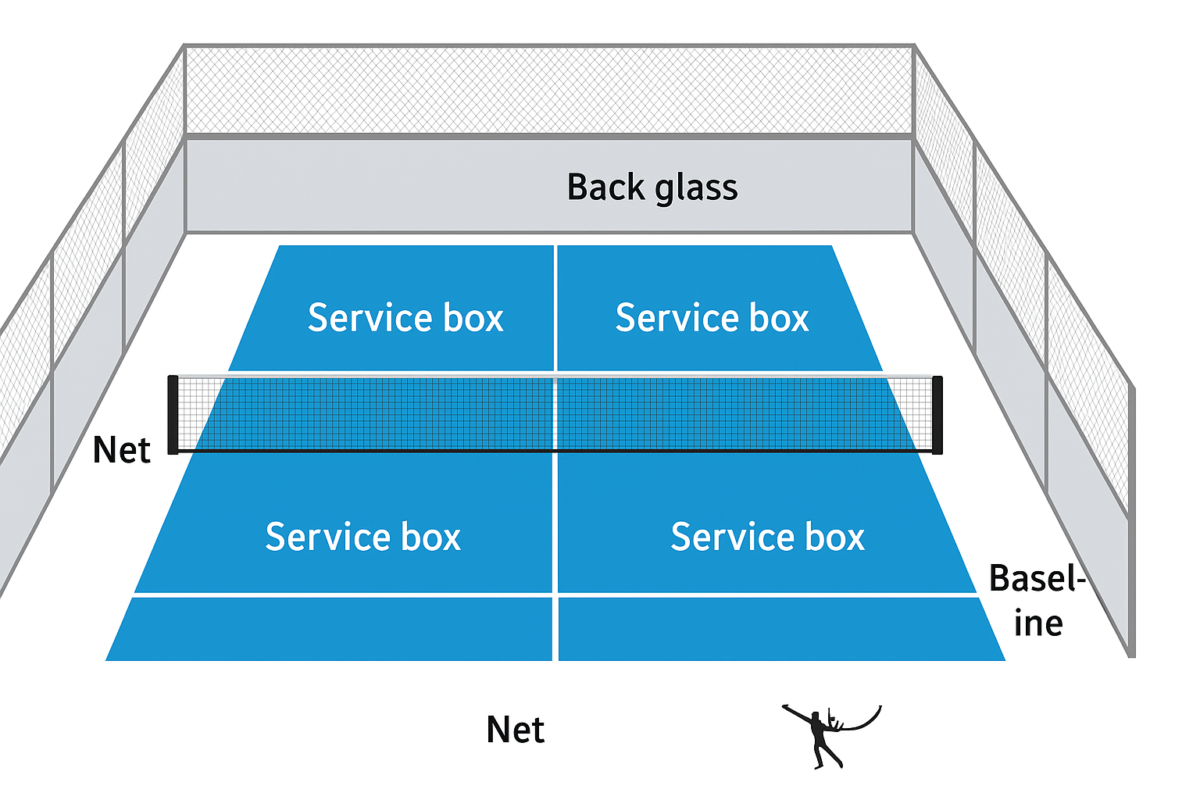
Tempered glass panels (3 meters high) and steel mesh fencing combine to create the signature padel enclosure.
PFS Padel uses anti-rust coated steel and UV-resistant glass — ensuring clarity and protection in all weather conditions.
Transition: A properly installed enclosure elevates both aesthetics and function.
Step 7 – Accessories and Finishing Touches
A professional padel court includes net posts, center straps, scoreboards, benches, and signage.
PFS Padel customizes these elements to match branding or facility themes, giving every installation a personalized finish.
Pro tip: Add your club’s logo or color scheme for a premium, recognizable identity.
Step 8 – Quality Testing and Certification
Before handover, every court undergoes rigorous quality checks.
PFS Padel ensures compliance with FIP (International Padel Federation) standards. Each component — from turf to lighting — is tested for performance, safety, and resilience.
Clients receive full technical documentation, warranty, and maintenance guides.
Step 9 – Maintenance and Aftercare
Even the best padel courts need regular care.
Routine inspections, sand refilling, and cleaning ensure longevity.
PFS Padel offers global aftercare programs, including maintenance contracts and replacement services — keeping every court in top form year after year.
Transition: A maintained court reflects professionalism and enhances player satisfaction.
Why Choose PFS Padel for Court Installation?
Global Expertise
From Europe to the Middle East and beyond, PFS Padel has built a reputation for precision-engineered courts tailored to diverse climates and terrains.
Turnkey Solutions
From concept to completion — including lighting, flooring, and accessories — PFS Padel manages every step, saving clients time and effort.
Premium Materials
Using world-class glass, steel, and turf systems, each court offers unmatched durability and aesthetic appeal.
Certified Quality
All courts comply with international federation standards, ensuring competitive-level performance.
Additional Services by PFS Padel
PFS Padel provides more than just installation — it delivers complete project management.
-
Custom designs and branding integration
-
Indoor and outdoor court solutions
-
Lighting automation and eco-friendly options
-
Maintenance and refurbishment services
Each project combines craftsmanship, technology, and sustainability to meet global standards.
Conclusion
Building a padel court requires precision, quality, and global expertise. From site selection to final testing, every phase matters.
With PFS Padel, you get a trusted partner delivering world-class padel court installations designed for performance, longevity, and style.
Ready to bring your project to life?
Visit padel.pfs.sport today and let the experts at PFS Padel turn your vision into a professional-grade court.